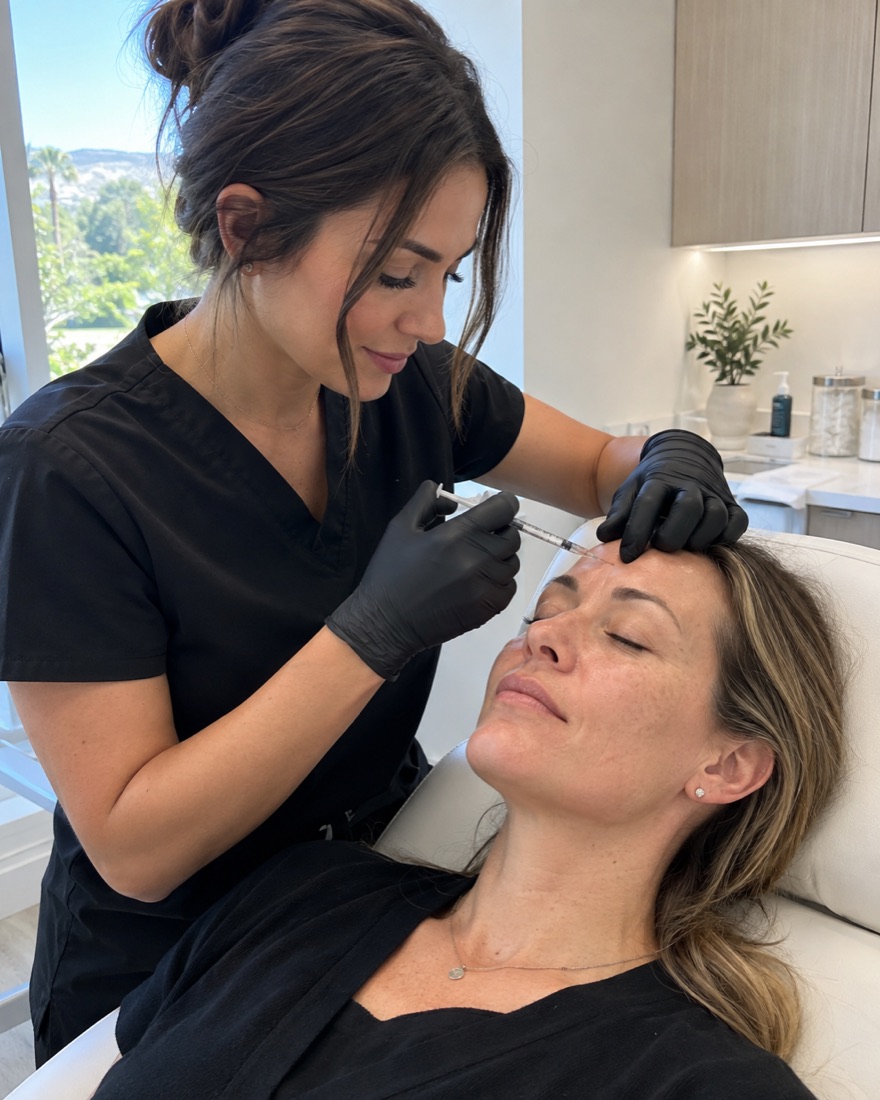
How Many Units of Botox Do I Need?
How many units of Botox do I need? Typical units for forehead, frown lines and crow's feet, what they cost in Pennsylvania, and who decides.
The laser targets the pigment in the hair and damages the follicle. It only works on hair in its active growth phase, and only part of your hair is in that phase at any one time. That is why you need a series of sessions.
How many? Sources differ. The American Academy of Dermatology says most patients need 2 to 6 treatments, once every 4 to 6 weeks. Cleveland Clinic says most people need about six, sometimes six to eight, usually six to eight weeks apart. Your provider sets your plan based on the area, your hair and your skin.
What to expect at the end: permanent reduction, not permanent removal. Cleveland Clinic notes that some hair grows back, but it is usually lighter and thinner. Many people go back for a maintenance session once or twice a year.
Laser hair removal is priced per session and per area. Pennsylvania med spas generally charge $50 to $400 a session, depending on how much ground the laser has to cover. These are typical ranges, not quotes.
Typical per session ranges by area: upper lip or chin $50 to $95, underarms $100 to $150, bikini $150 to $300, full legs $200 to $450.
The number that matters is the course price. Multiply the session price by the number of sessions your provider recommends. As an example, not a quote: six underarm sessions at $100 to $150 each comes to $600 to $900.
Many practices discount a course bought upfront, often by 10 to 20 percent. Before you pay, ask what happens to unused sessions if you stop, move, or the practice closes.
For reference, the American Society of Plastic Surgeons lists $697 as the average fee for laser skin treatments like laser hair removal. That figure covers a broad category, so use it as a benchmark, not a price.
Compare Laser Hair Removal Prices Near You
The AAD says laser hair removal works best on light skin with dark hair. People with darker skin can be treated, but the AAD says it must be done very carefully, and the device matters.
Cleveland Clinic says it may not work as well on hair that is blonde, gray, white or red, because there is little pigment for the laser to find.
Tell your provider if you take any medications, including acne treatments, and if you have a tan. Tanned skin, natural or from a tanning bed, can make treatment less effective and raise the risk of side effects.
Only your provider can tell you whether you are a candidate. This guide is general education.
Ask every clinic which device they use. Here is what the common names mean.
Alexandrite (755 nm): a laser often used on lighter skin. A 2019 review of studies in skin of colour found it reduced hair better than IPL.
Diode (around 800 to 810 nm): a laser used across a range of skin tones. In one comparison study it gave the largest hair reduction after eight sessions, with Nd:YAG close behind.
Nd:YAG (1064 nm): the longest wavelength of the group. It reaches deeper and is the usual choice for darker skin. The 2019 review found it carried a lower risk of skin darkening than IPL in skin of colour.
IPL (intense pulsed light): not a laser. It uses a broad band of light. In comparisons it has often reduced hair less than the lasers above.
Many clinics own more than one device, or one machine with more than one wavelength. The right choice depends on your skin and hair, and your provider should explain why they picked it.
Questions to ask: Which device will you use on me, and why? Is it FDA cleared for hair removal? (You can search the FDA 510(k) database by device name.) Who operates it, what is their training, and who is the supervising physician? Look up licenses on PALS at pals.pa.gov.
Find Laser Hair Removal Providers in Your Town
Before session 1: book a consult. Ask about the device, the number of sessions, the course price and the refund policy. Stay out of the sun and away from tanning beds.
Session 1: you will wear protective eyewear. Cleveland Clinic says it can feel like a series of stings or a rubber band snap, and it can take a few minutes for a small area or up to an hour for a large one. Some practices offer numbing gel, which the AAD says takes 30 to 60 minutes to work, so ask ahead. Cleveland Clinic notes that most people see about a 10% to 25% reduction in hair growth after the first treatment.
Between sessions: shaving is fine. Do not wax, tweeze or pluck the treated area, because the laser needs the hair root in place. Treated hairs may shed over the following weeks.
Sessions 2 and 3: book them at the interval your provider sets, usually somewhere between 4 and 8 weeks. Keeping to the schedule matters more than squeezing sessions closer together.
Sessions 4 to 6, or up to 8: hair should be coming back thinner and lighter. Take a photo of the area before each session so you can see the change.
After the course: ask your provider whether and when to book maintenance. Once or twice a year is common.
Shave the area ahead of time. Cleveland Clinic says two to three days before. Some practices ask for the day before, so follow theirs.
No waxing, tweezing or plucking in the area once treatment starts.
Avoid sun and tanning beds, and skip self-tanner unless your provider says otherwise.
Tell your provider about any new medication since your last visit.
Arrive with clean skin: no lotion, deodorant or makeup on the area unless the practice says it is fine.
Right after: redness, swelling and some discomfort are common. A cool compress helps. The AAD says the common side effects are minor and last 1 to 3 days.
Next few days: keep direct sun off the treated skin, and do not use tanning beds or sun lamps. Wear loose clothing over treated body areas.
Every day: use a broad spectrum sunscreen of SPF 30 or higher on exposed skin, which is the AAD's general advice for everyone.
Follow your clinic's written aftercare. If they tell you to avoid certain products or heat for a few days, do it.
Call your provider if you see blistering, signs of infection, a cold sore outbreak, or skin turning lighter or darker. The AAD lists these as rare side effects, and they need a provider's attention.
How many units of Botox do I need? Typical units for forehead, frown lines and crow's feet, what they cost in Pennsylvania, and who decides.
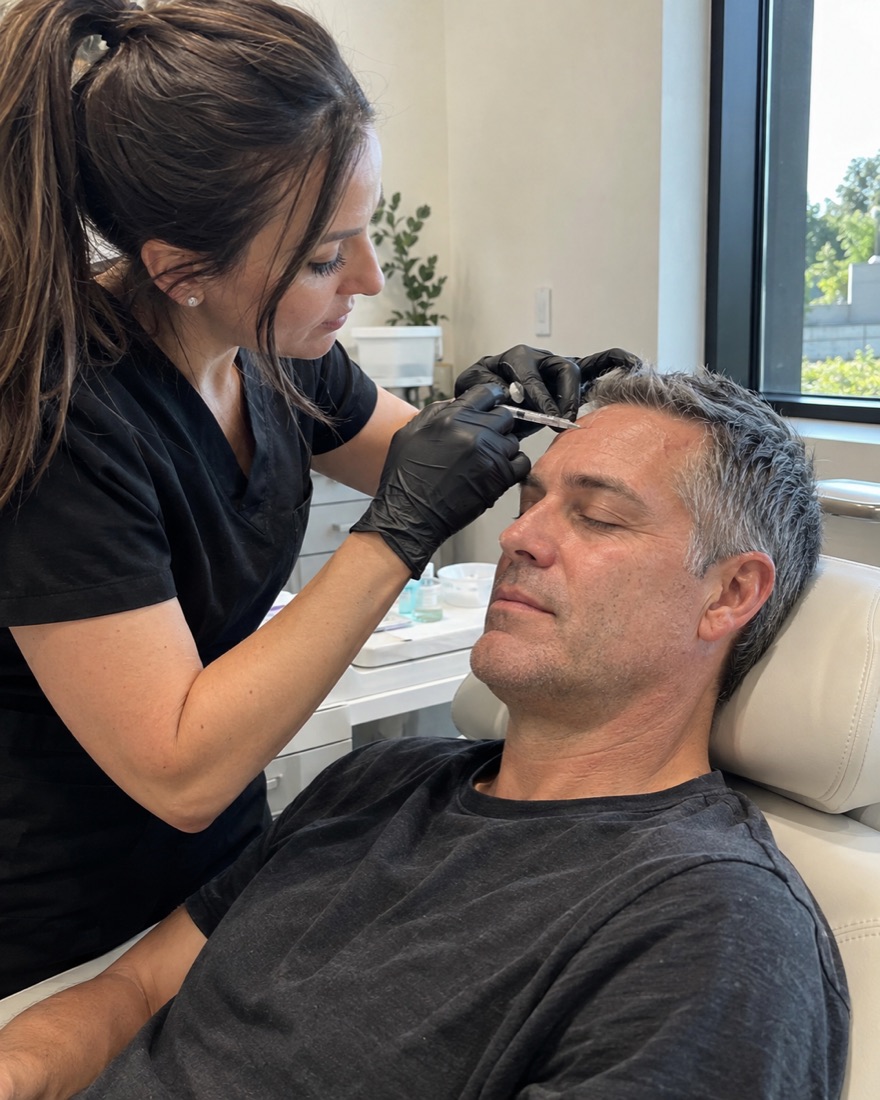
Botox is priced per unit, so the honest answer to what it costs depends on how many units you need. Pennsylvania practices typically charge between $10 and $25 per unit, and most treatments land somewhere between 20 and 60 units.
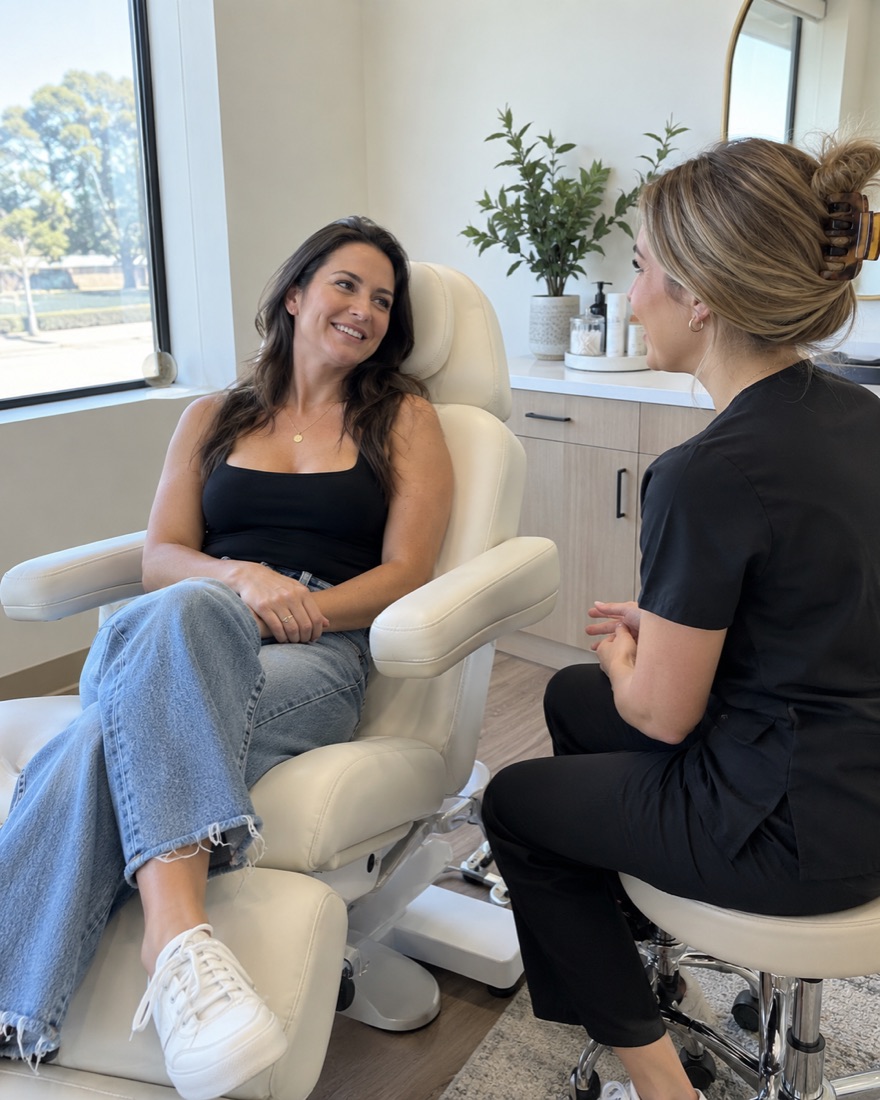
Lip filler is priced per syringe. Most Pennsylvania practices charge $550 to $1,000 a syringe, and one syringe is the normal starting point rather than the whole plan.